30-Days Money Back Guarantee

Delivery in 2-5 business days

Proud member

5.0 Stars on Google Reviews
30-Days Money Back Guarantee
Delivery in 2-5 business days
Proud member
5.0 Stars on Google Reviews
Delivery in 2-5 business
5.0 Stars on Google Reviews Warranty on All Containers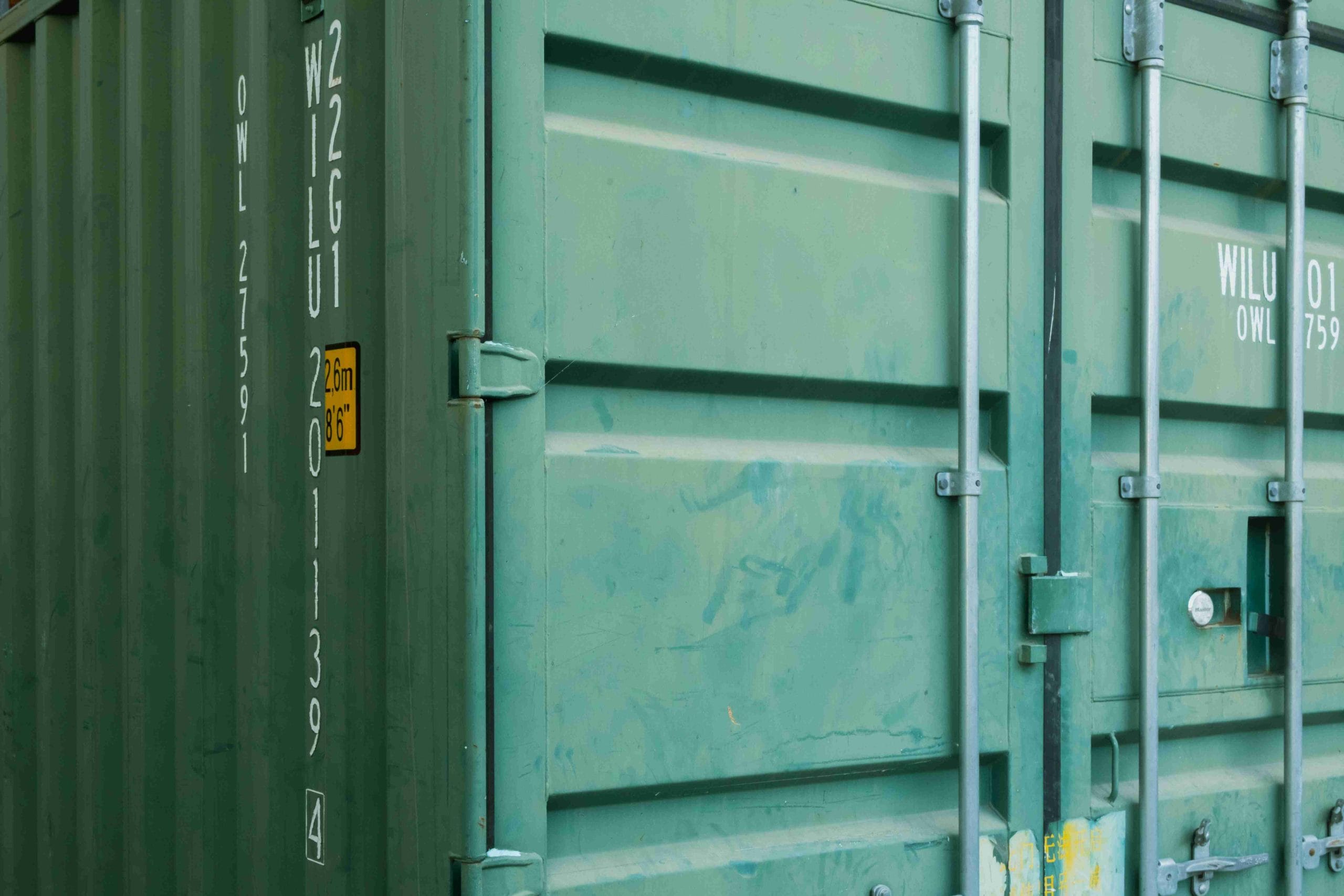
The answer: Standard shipping containers offer minimal ballistic protection, but strategic modifications can significantly improve their bullet resistance.
This guide explores the ballistic capabilities of shipping containers, the factors that affect their protective qualities, and proven methods for enhancing their security.
To understand a shipping container’s defensive capabilities, we first need to examine how shipping containers are built and what materials comprise them.
Most shipping containers use corten steel, also known as weathering steel. This alloy offers several advantages:
While corten steel excels in these areas, it wasn’t engineered with ballistic threats in mind.
The walls of standard shipping containers measure between 0.063 to 0.079 inches of corrugated steel. Certain container sections feature greater thickness, including corner posts, door assemblies, and floor crossmembers. However, even these reinforced areas lack the specifications needed to reliably stop projectiles.
The short answer is no, shipping containers are not bulletproof. The steel used in their construction can stop certain low-caliber rounds, but it is not designed to provide comprehensive ballistic protection.
Here’s a closer look at how different types of bullets interact with shipping container steel:
Small-caliber handgun rounds have limited penetration power compared to rifles.
They can create dents or deformations in the surface or partially deflect when hitting at oblique angles.But despite these scenarios, most handgun rounds will breach the walls, particularly from short distances.
High-caliber rounds from rifles or larger handguns are much more likely to penetrate the steel walls of a shipping container. These rounds possess higher velocity and energy, making them capable of breaching the thin steel used in container construction.
Armor-piercing rounds are specifically designed to penetrate heavy armor and hardened targets. These bullets can easily pierce through the steel walls of a shipping container.
While standard containers aren’t bulletproof, they can be transformed into fortified structures through various upgrade approaches.
Here are common bullet resistant shipping container modifications:
Professional-grade ballistic materials include:
Properly installed ballistic materials enable containers to withstand handgun fire, rifle rounds, and potentially armor-piercing threats depending on the protection level chosen.
Another method is layering steel, such as welding 0.12-0.24 inch steel plates onto the interior or exterior walls. This creates double-wall barriers with air gaps and adds internal steel framing.
This reinforced shipping container bulletproof strategy increases weight significantly but boosts protection.
Concrete and sand both act as excellent kinetic energy absorbers. The reinforcement can be done by pouring concrete into framed interior walls or filling the empty spaces with sand as a cost-effective barrier.
Once upgraded, bullet-resistant containers serve important roles across industries and highlight various shipping container uses:
Shipping containers, while strong and durable, are not inherently bulletproof. Their steel construction can offer some protection against small-caliber bullets, but they are not designed to withstand high-caliber or armor-piercing rounds. For those seeking bullet-resistant properties, additional modifications and reinforcements are necessary. Understanding the limitations and possibilities of shipping containers can help in making informed decisions about their use in security and protective applications.
Hiding in a shipping container can offer concealment but provides limited real protection because standard Corten steel walls are easily penetrated by common firearm rounds, especially rifles. While the container may block a shooter's line of sight, it does not offer reliable ballistic resistance and can even trap you if access becomes blocked.
The cost to bulletproof a shipping container varies widely, from several thousand dollars for basic reinforcement to over $100,000 for a fully customized, secure container or bunker. A precise price depends entirely on the specific security requirements, materials used, and modifications needed.
Bullet-resistant containers are generally legal for law-abiding citizens in the United States. Some states have additional restrictions, so checking state laws is essential. The biggest practical hurdles are usually local zoning and building codes, which dictate where and how a container can be placed or used.