30-Days Money Back Guarantee

Delivery in 2-5 business days

Proud member

5.0 Stars on Google Reviews
30-Days Money Back Guarantee
Delivery in 2-5 business days
Proud member
5.0 Stars on Google Reviews
Delivery in 2-5 business
5.0 Stars on Google Reviews Warranty on All Containers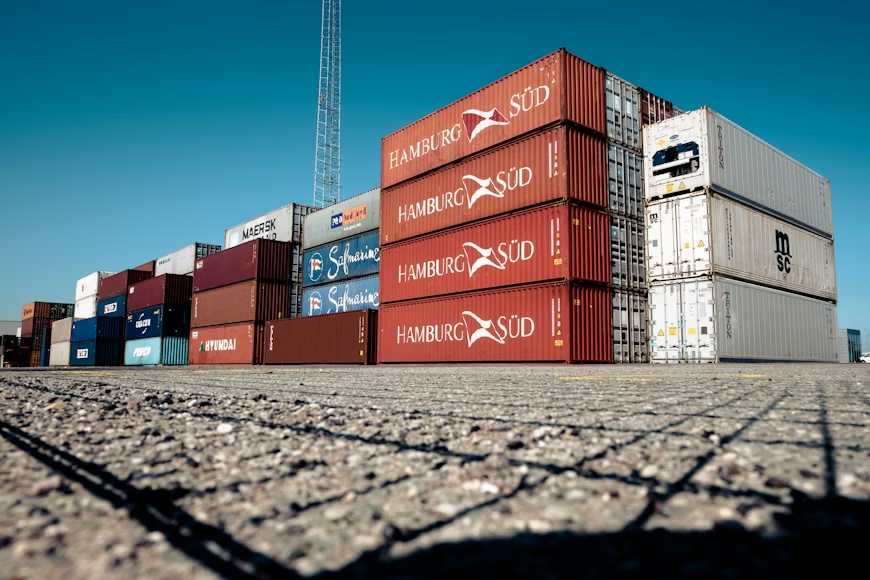
Dry containers, often referred to as general purpose containers, are fully enclosed units designed to protect cargo from the external environment. They are the most commonly used container type for transporting goods that do not require temperature control or special handling.
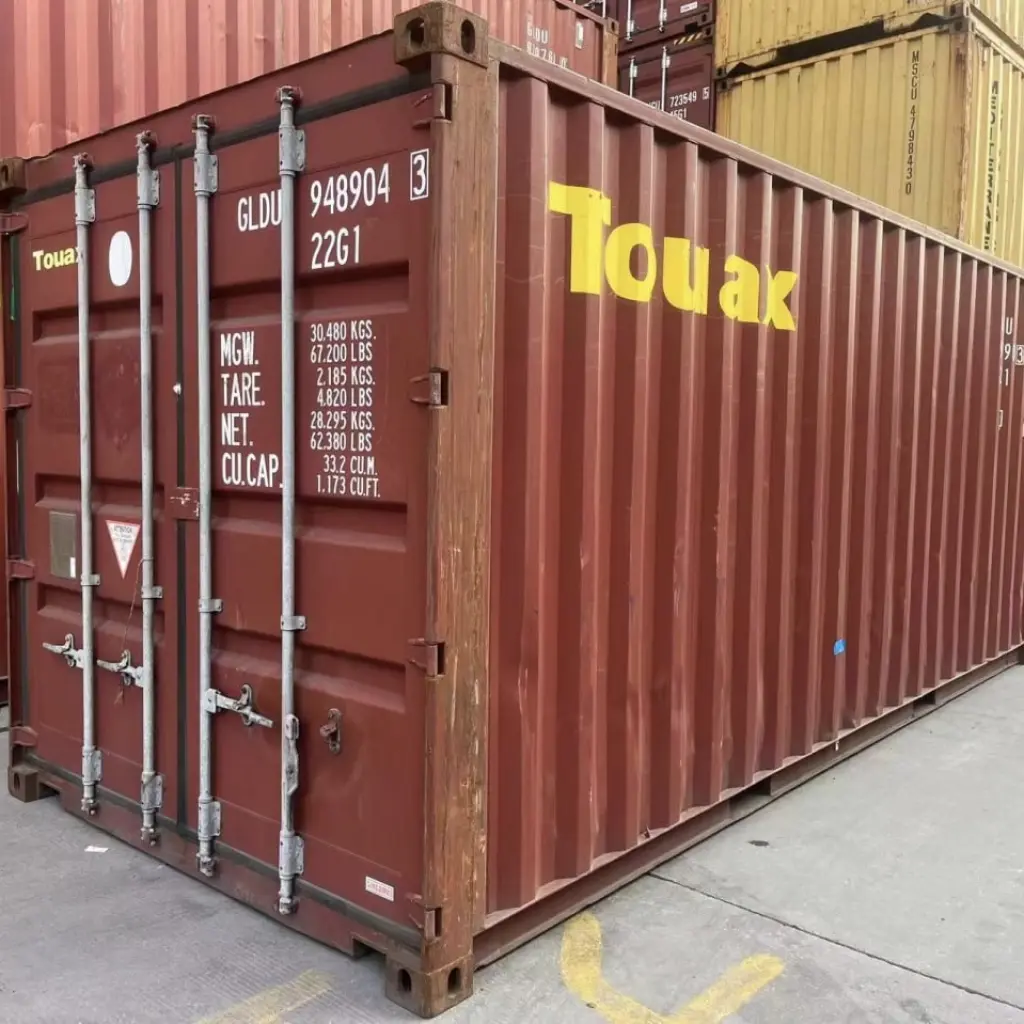
General purpose containers are widely available and compatible with standard handling and transport systems. Thanks to their availability and straightforward design, they are typically the most cost-effective option (see our container pricing guide to compare costs across different container types).
High cube containers are similar in structure to standard dry containers but are built with extra height to increase internal volume. This design allows for more space without altering the container’s footprint, making them useful for certain types of bulky or lightweight cargo.
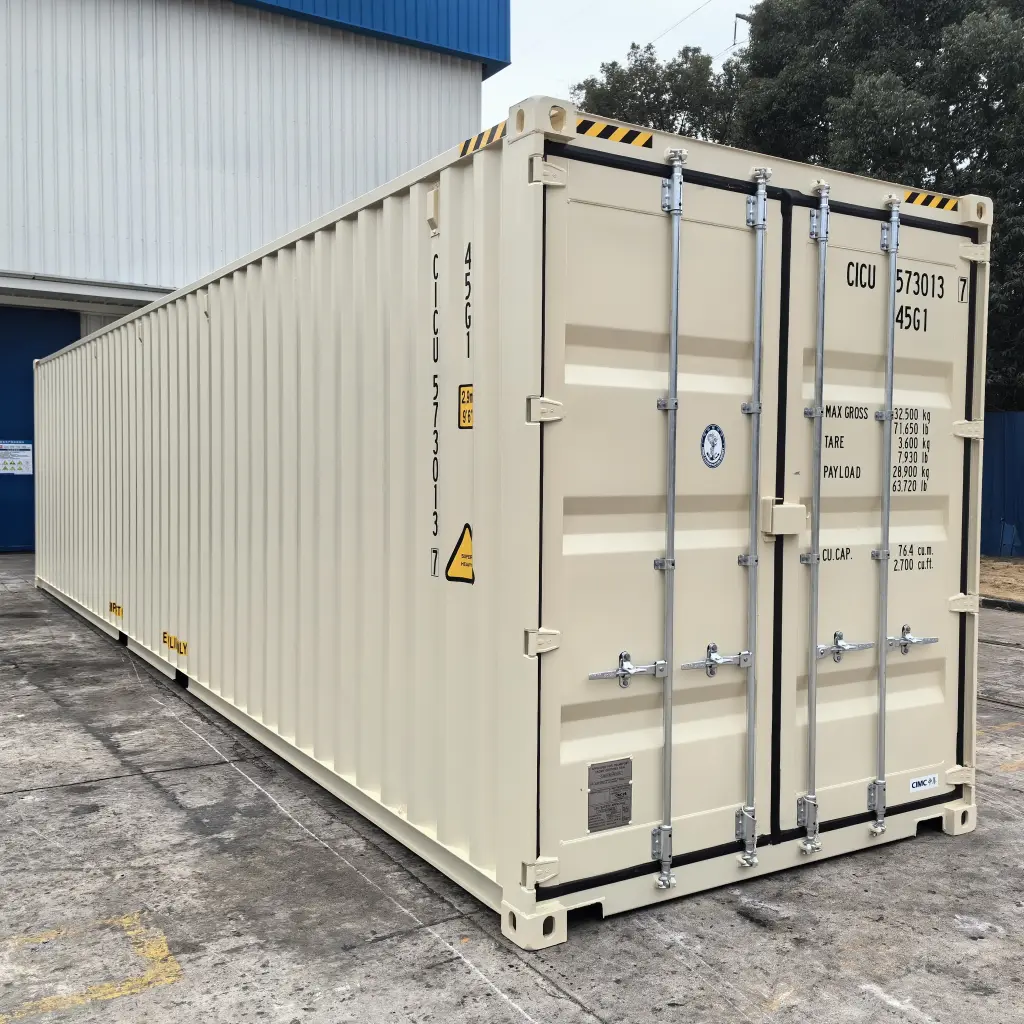
High cube containers are commonly selected when volume capacity is more important than weight limits.
Refrigerated containers, or reefers, are built with integrated systems that actively manage internal temperature. These containers are used to transport cargo that must remain within a specific temperature range throughout the journey.
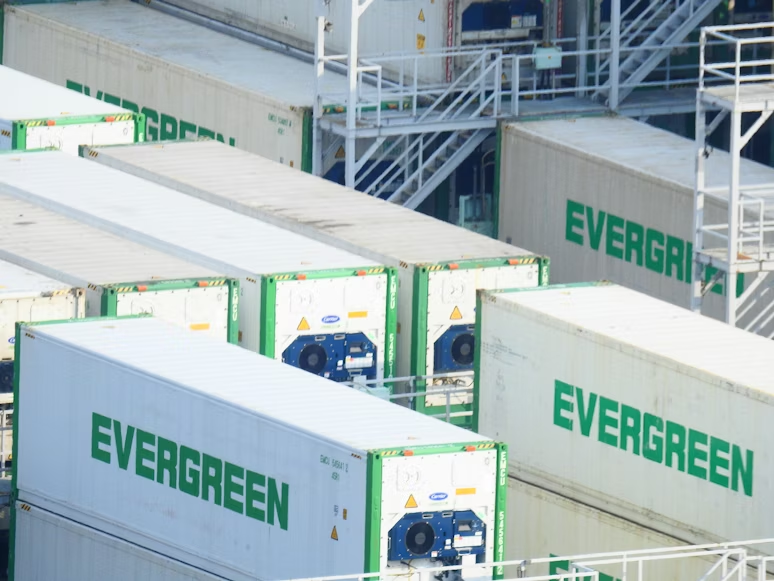
Reefer containers require access to a power source and are often used for perishable goods or temperature-sensitive materials.
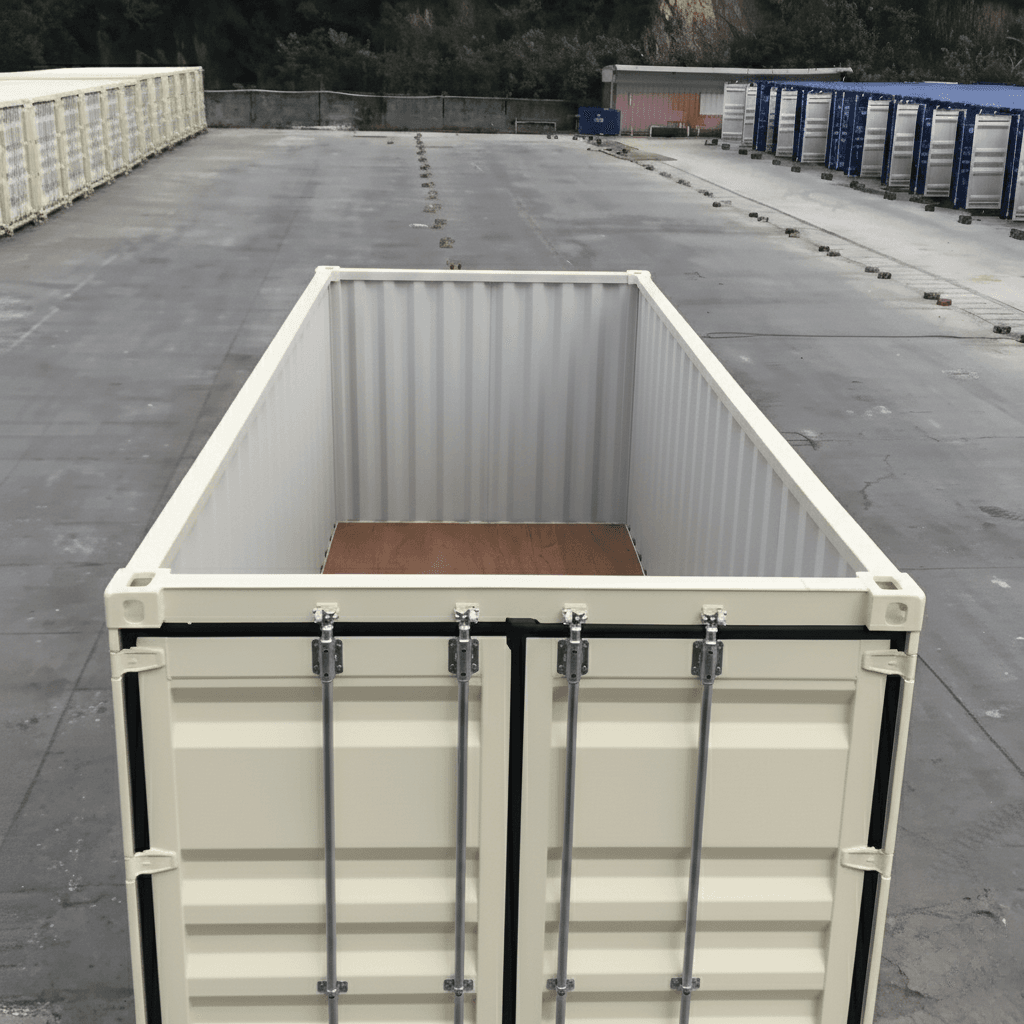
Open top containers feature a removable cover instead of a solid roof, allowing goods to be loaded from above. This configuration is useful when cargo is too tall or irregularly shaped to fit through standard doors, or when it must be lifted into place by crane. A tarpaulin or similar material is typically used to secure and protect the load.
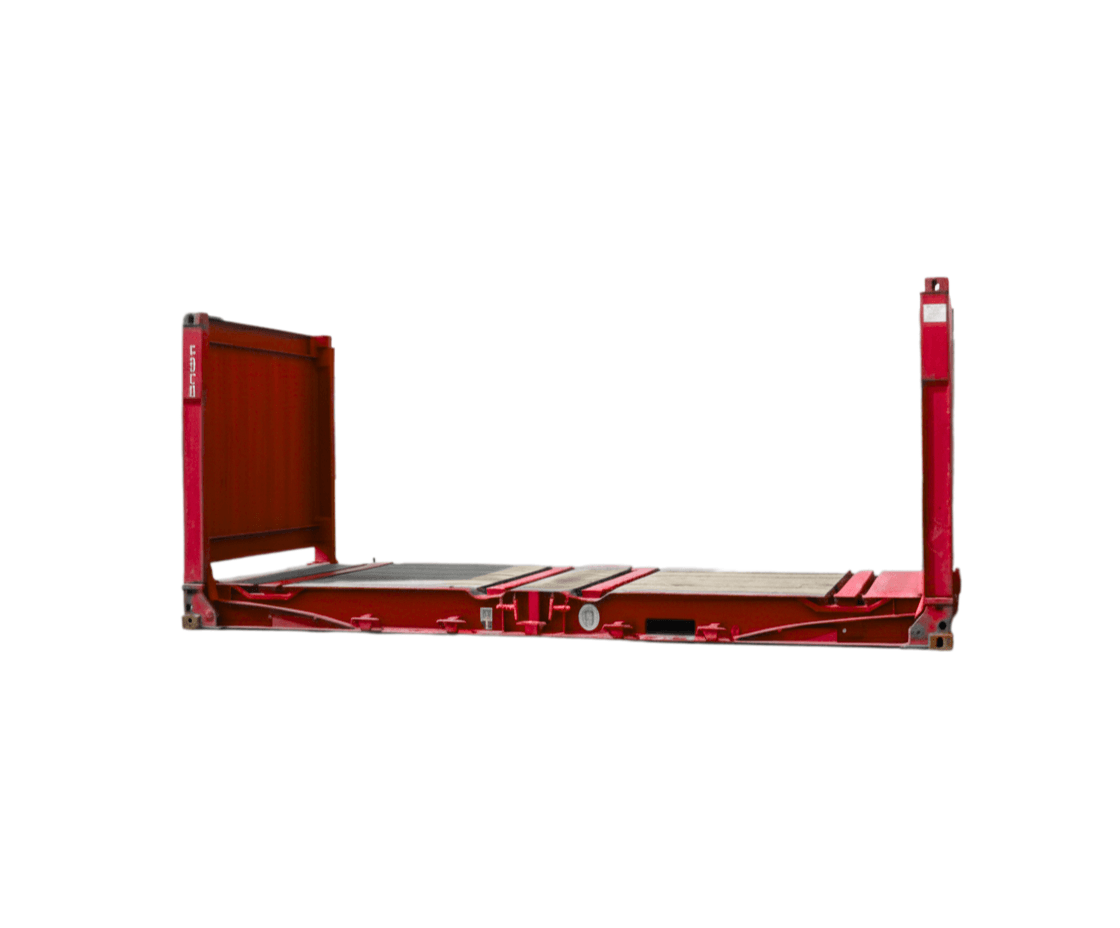
Flat rack containers are designed with no side walls and only end frames, allowing for cargo to extend beyond the container’s width. They are well suited for transporting large or heavy equipment that cannot be loaded into enclosed containers. Items are typically secured directly to the base using straps or lashing equipment.
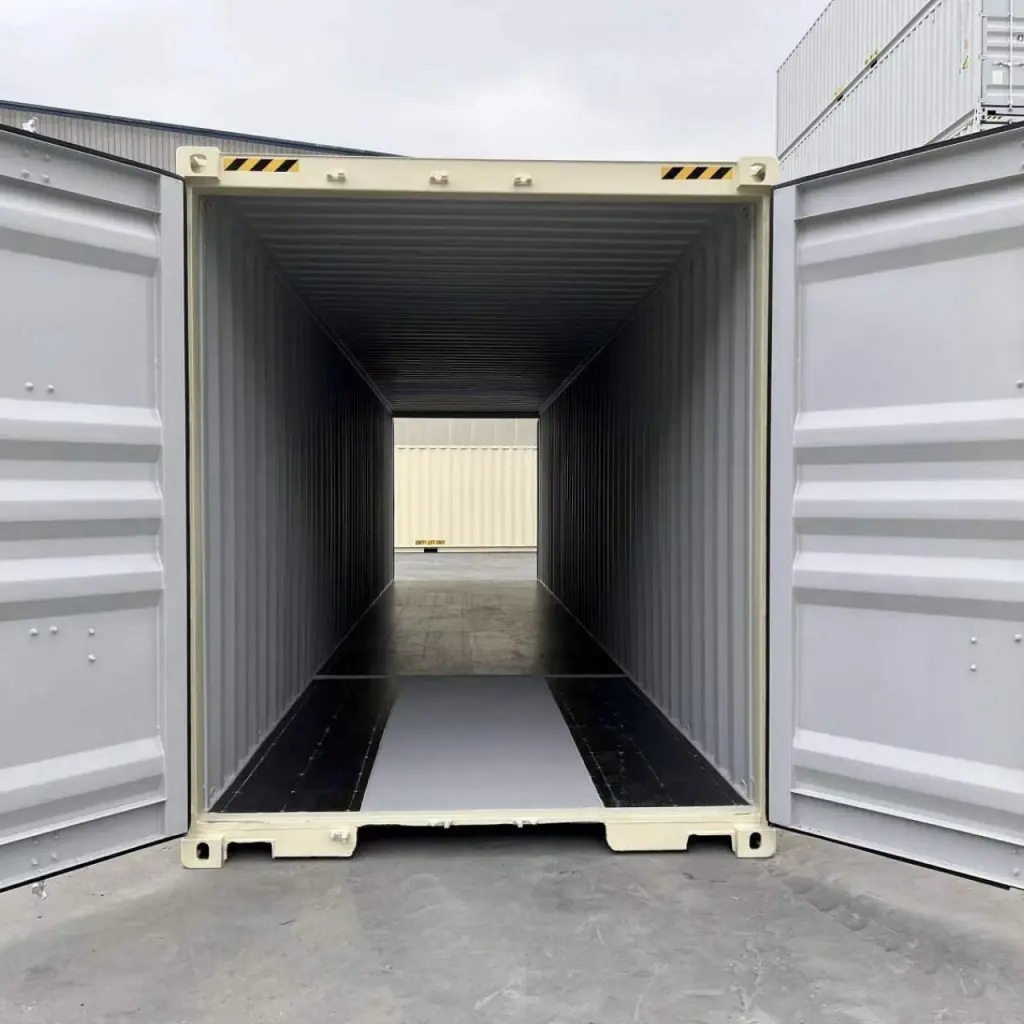
Double door containers have openings at both ends, enabling easier access and faster loading or unloading from either side. This design supports more flexible use in situations where quick turnaround or accessibility is important, such as for site storage or short-term logistics needs.
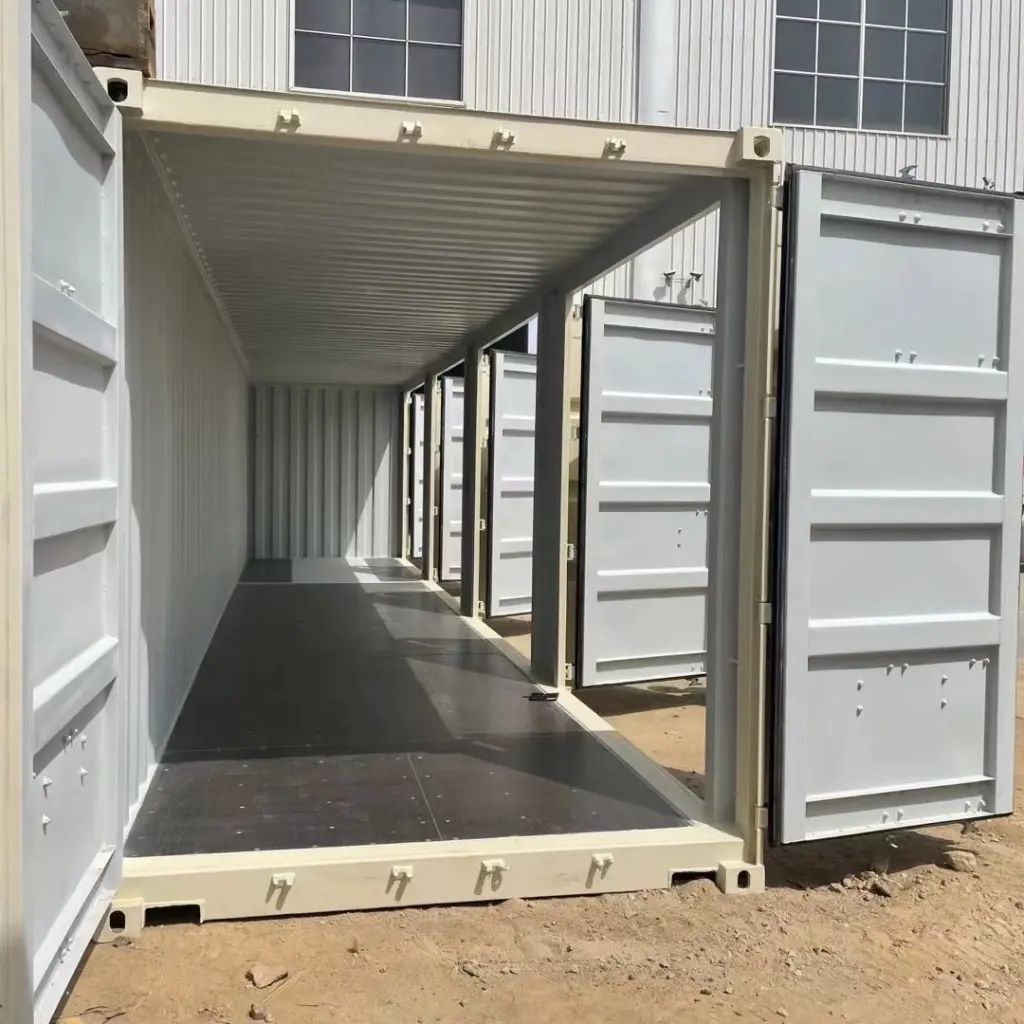
Open side containers have one or more side walls that can be fully opened, providing wider access to the cargo area. These containers are commonly used when items are too large to fit through end doors, or when more visibility and access is needed during loading and unloading.
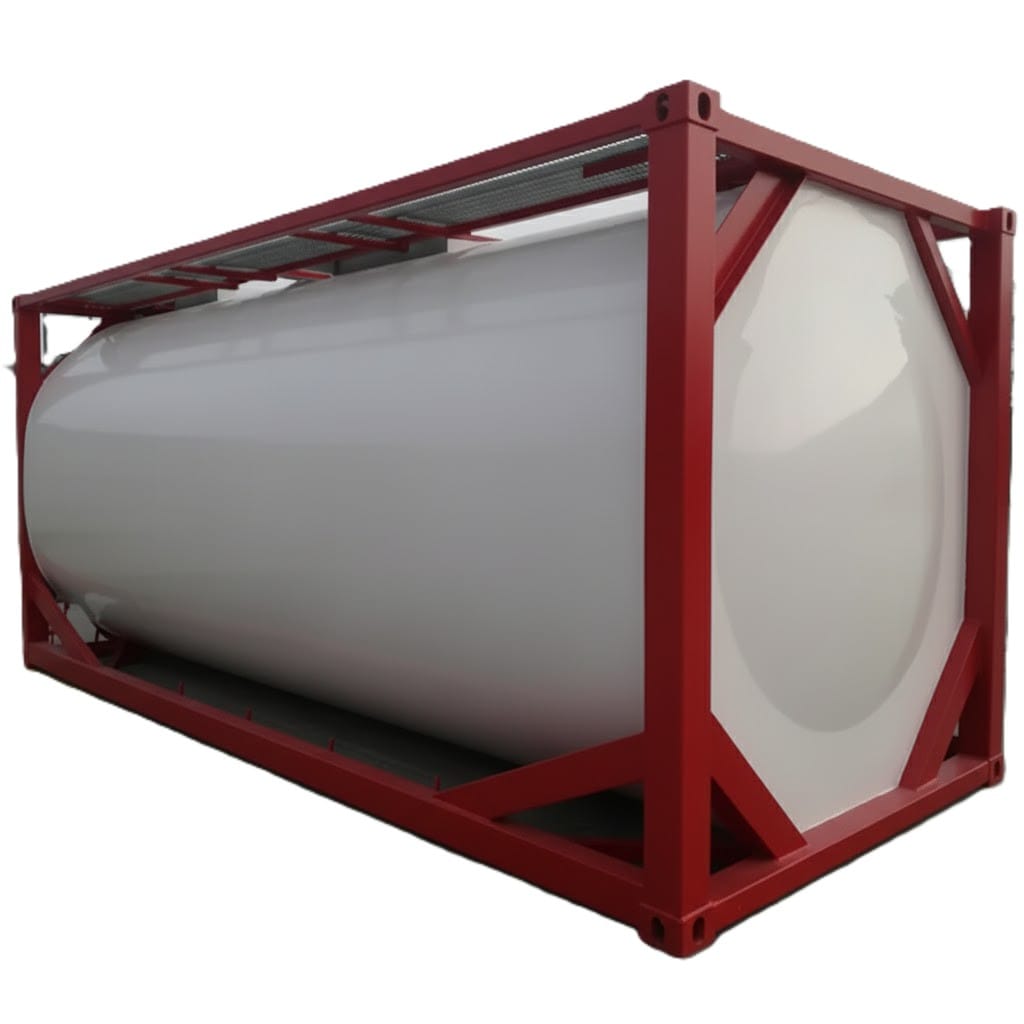
Tank containers are purpose-built for transporting bulk liquids, gases, or chemicals. They consist of a cylindrical tank supported within a standard container frame. These units must comply with safety and cleanliness standards relevant to the type of substance being transported, and they are commonly used across food, chemical, and energy industries.
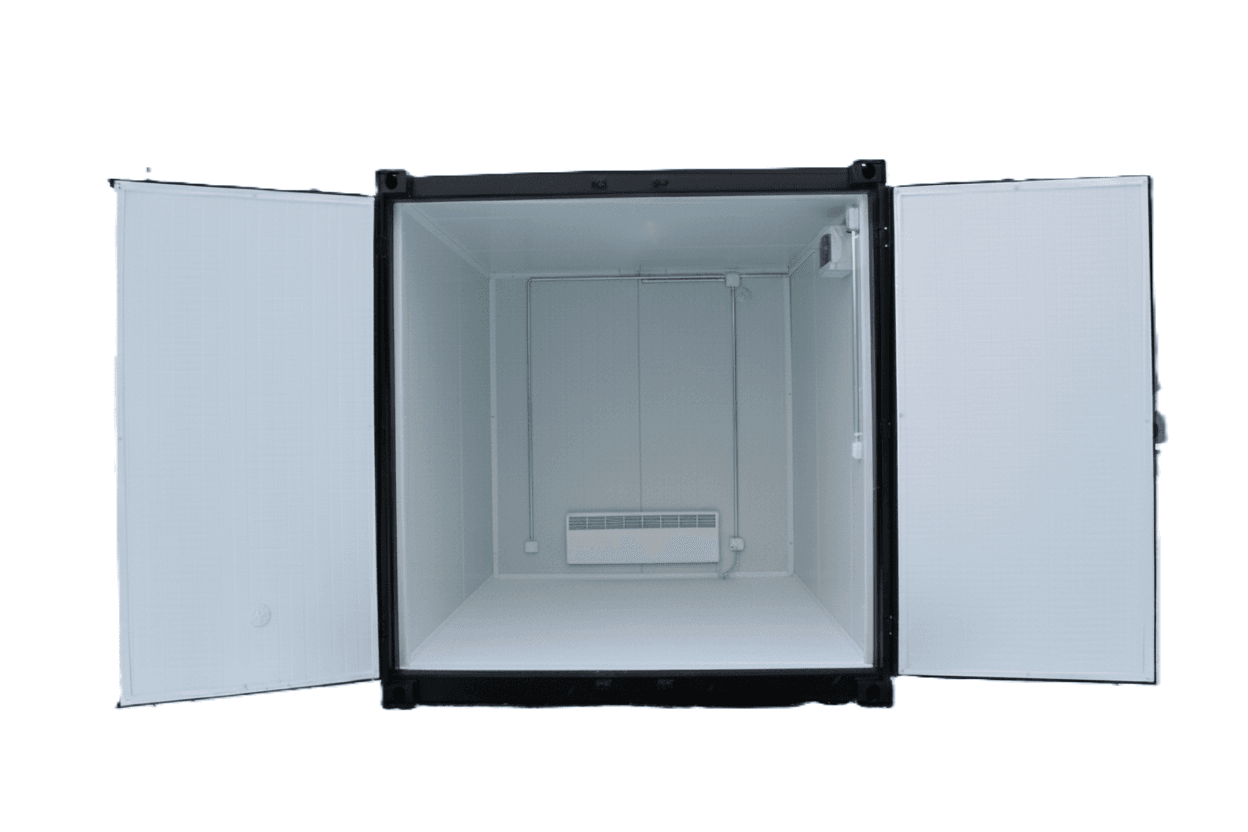
Insulated containers provide passive temperature protection without using mechanical cooling or heating. They help limit exposure to extreme temperatures during transit and are suitable for goods that do not require precise climate control but still benefit from a stable environment.
While the container types above are widely used, additional formats exist for specific applications.
These are shorter containers designed to carry dense cargo that does not require full-height space. Their reduced profile allows for easier loading and unloading of heavy materials.
Car carrier containers are configured to safely transport vehicles. They may include internal fittings or supports that help secure one or more vehicles during transit.
These are mobile containers designed for short-distance movement of goods, often used within warehouses or distribution centers.
Swap bodies are used primarily in European intermodal transport. Unlike ISO containers, they are not always stackable and are optimized for road and rail use.
These containers are used for shipping smaller quantities of liquids or powders. They are often stackable and designed to be handled efficiently in storage and transport operations.
Specialized containers are built to transport hazardous or regulated materials safely. They comply with international standards for containment, labeling, and handling of dangerous goods.
All shipping containers are marked using standardized ISO 6346 codes, which include the owner code, serial number, check digit, and type identifier. Abbreviations such as GP (general purpose), HC (high cube), RF (refrigerated), OT (open top), and TK (tank) help identify the container’s design and function at a glance.
Shipping containers must meet international standards that support safety and compatibility across transport modes. These include ISO specifications for sizing and construction, CSC certification for structural integrity, and TIR and DNV classifications for specific transit and offshore requirements. These frameworks ensure containers can be used safely and consistently around the world.
Shipping containers are produced in standardized sizes to streamline handling and logistics. Common lengths include 10-foot, 20-foot, 40-foot, and 45-foot units. These dimensions allow for predictable capacity planning and ensure compatibility with global shipping and transport infrastructure.
Beyond their original logistics function, shipping containers are widely adapted for alternative uses. They can be seen as storage units, temporary offices, emergency shelters, or modular structures for retail and housing. Their durability and modular design make them a popular choice for both commercial and personal projects.
If you’re considering a container for shipping or a custom application, read our guide on how to choose the right container to ensure it fits your project’s size, access, and handling needs.
Viva Containers offers a full range of new and used containers, including general purpose standard, high cube, open side, and double door units. With reliable quality, fast nationwide delivery, and tailored solutions, Viva Container supports customers across industries and project types.
Contact us to request a custom quote based on your needs.
There are over a dozen standard container types used in global logistics. These include general purpose (dry) containers, high cube containers, refrigerated (reefer) containers, flat racks, open tops, open side containers, double door containers, ISO tank containers, and insulated or thermal containers. In addition, there are specialized formats such as car carriers, half-height containers, cargo roll containers, swap bodies, and hazardous material containers.
General purpose (dry) containers are typically the most cost-effective option. Their simple design, high availability, and widespread use make them more affordable compared to specialized containers like reefers, tanks, or open-side units.
The most popular container type worldwide is the 20-foot or 40-foot general purpose container. These units are used across nearly every industry for transporting goods that don’t require temperature control or special handling.
The standard dry container – also referred to as a general purpose or GP container – is the most common type. It is fully enclosed, weatherproof, and suitable for most cargo that can be loaded through end doors.
ISO containers are built to international standards (ISO 668) that ensure uniform sizing, stacking, and transport compatibility across global shipping networks. Conex containers, originally developed for U.S. military use, may refer to similar steel containers but do not always conform to ISO standards. Today, “conex” is often used informally in North America to describe storage containers, whether or not they are ISO-compliant.