30-Days Money Back Guarantee

Delivery in 2-5 business days

Proud member

5.0 Stars on Google Reviews
30-Days Money Back Guarantee
Delivery in 2-5 business days
Proud member
5.0 Stars on Google Reviews
Delivery in 2-5 business
5.0 Stars on Google Reviews Warranty on All Containers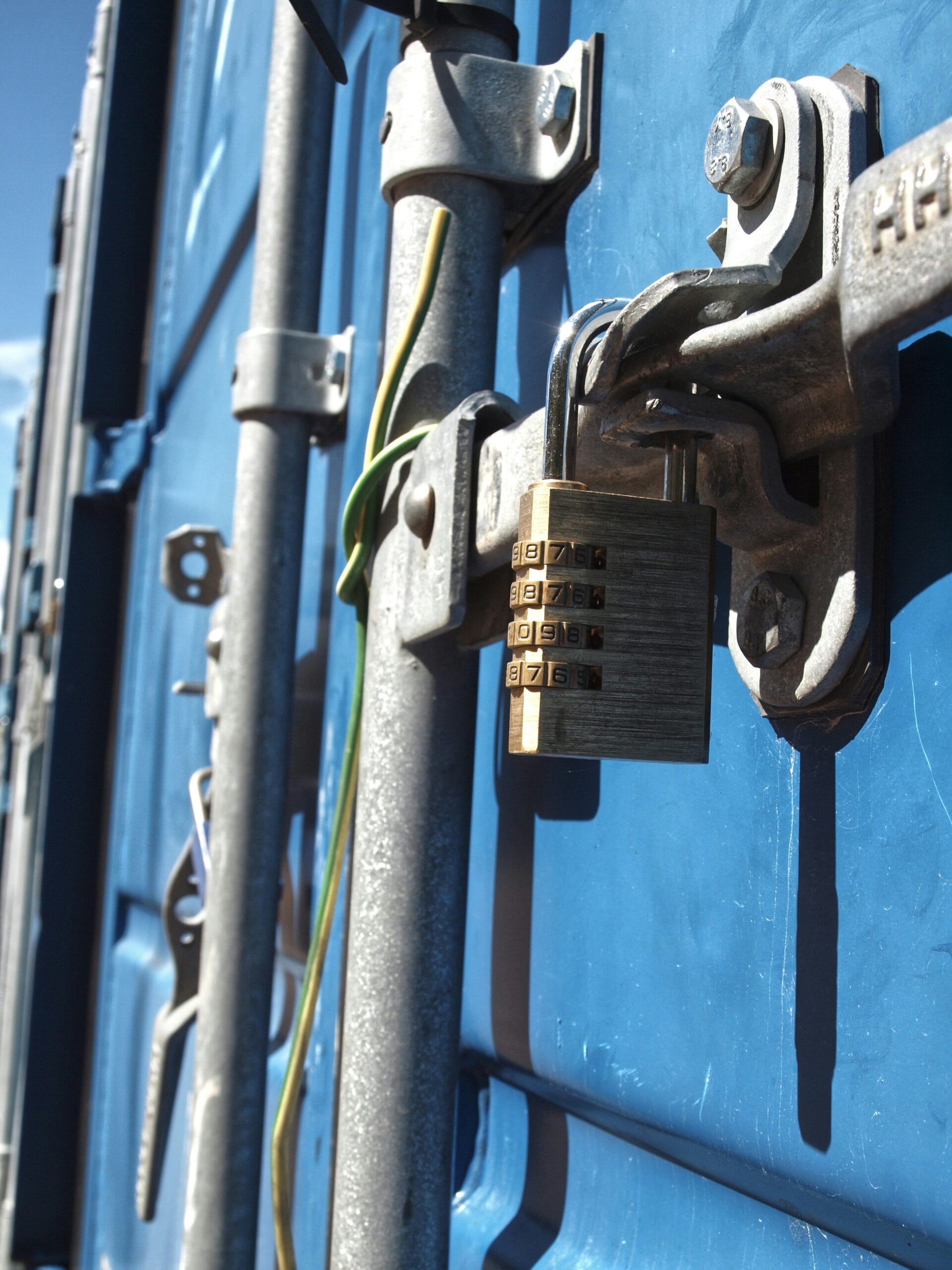
There are three main types of shipping container locks:
Let’s have a deeper look at the types of locks, their advantages and disadvantages, ways to maximize security and common mistakes to avoid.
Choosing the right container lock requires more than picking the heaviest padlock. To match your security needs with the right product, evaluate these key factors before you buy.
Choosing the right lock for your shipping container depends on your security needs, location, and how the container is being used. Below are the most common types of container locks and their ideal applications.
Padlocks are the most widely used and budget-friendly option for securing containers. Made from hardened steel or boron alloy, they work with a hasp system that’s welded onto the container doors.
Ideal for: General shipping container storage, construction sites and temporary setups.
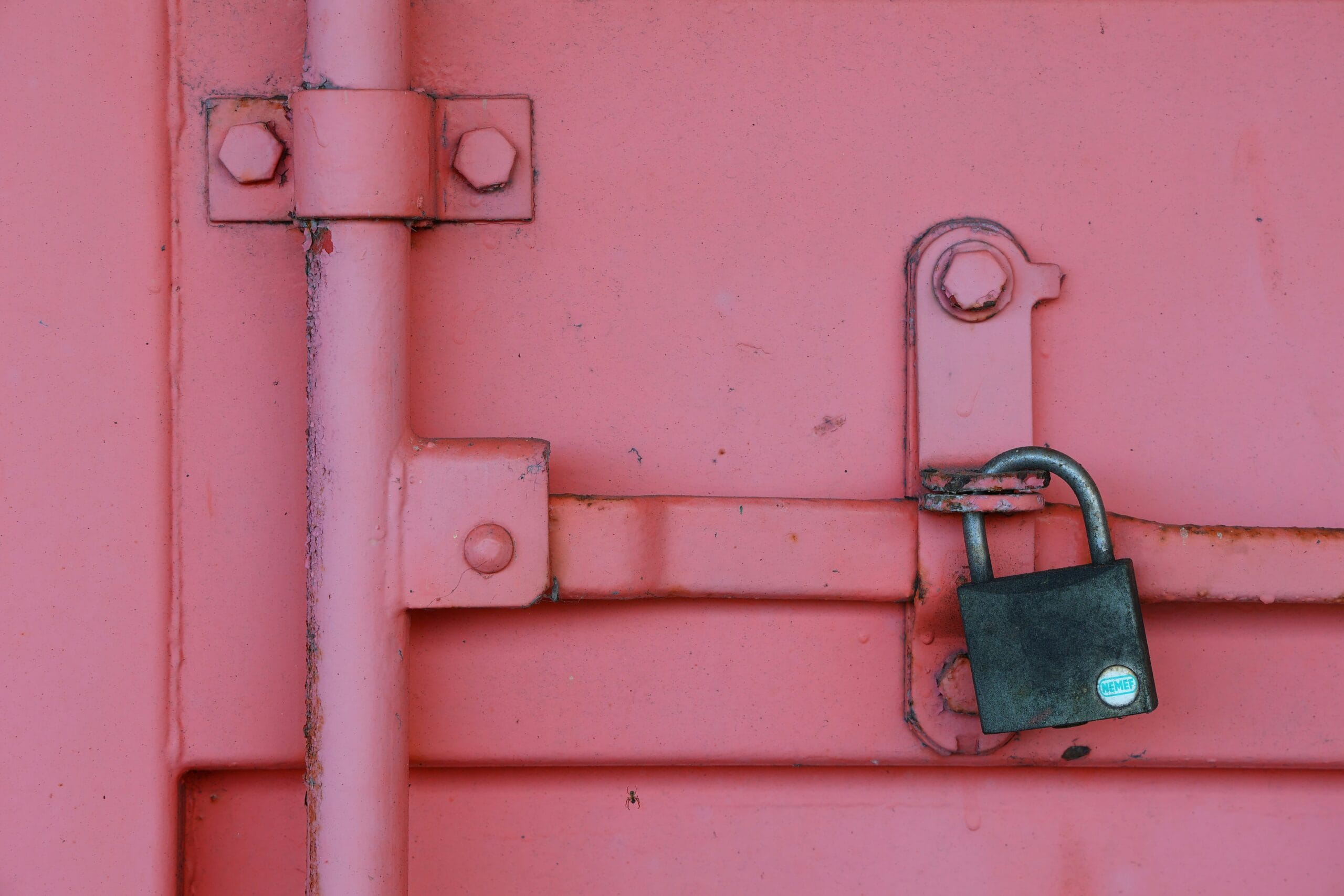
These padlocks feature a protective design that conceals the shackle entirely, eliminating access points for bolt cutters or pry bars.
Ideal for: Remote locations, extended storage periods, and protecting high-value inventory.
Crossbar locks use a heavy steel bar that spans both container doors and clamps them tightly together, creating a reinforced barrier.
Ideal for: Exposed yard storage, active job sites, and containers in transit.
These specialized locks are engineered for containers with roll-up doors, fitting directly into the door track to prevent unauthorized lifting or forced entry.
Ideal for: Converted containers, mobile offices, pop-up shops, and retail spaces.
Bolt seals are one-time-use steel pins that lock container doors while providing visible evidence of tampering. Once installed, they must be cut to be removed.
Ideal for: Containers moving by truck, rail, or ocean freight.
Twist locks are mechanical devices that insert into a container's corner castings to secure it during stacking or transport. They prevent movement but aren't designed to deter theft.
Ideal for: Ensuring the best way to secure shipping containers. Whether it’s on cargo ships, flatbed trailers, or in stacked storage configurations.
Different lock types vary in construction, security, and use. The right choice balances deterrence with practicality, as no single design suits all situations. Below is a detailed comparison of the advantages and disadvantages of the main types of shipping container locks:
Lock Type | Advantages | Disadvantages |
|---|---|---|
Padlocks | Affordable, easy to install | Exposed shackles can be cut |
Hidden-Shackle Padlocks | High tamper resistance | Costlier and needs alignment |
Crossbar Locks | Strong visual deterrent | Bulky and needs maintenance |
Roll-Door Locks | Custom fit, tamper-resistant | Not for swing doors |
Bolt Seals | Tamper-evident, compliant | Single-use only |
Twist Locks | Load-bearing, standardized | Not for theft prevention |
Even the best lock can only do so much. Here’s how to strengthen your overall security setup:
Even the best storage container can become a security risk if not locked properly. Here are common safety lock mistakes to avoid keeping your container and its contents secure:
Choosing the right shipping container lock isn’t just about price, it’s about protection. By understanding the differences between lock types, investing in quality materials, and avoiding common mistakes, you can safeguard your assets effectively, no matter where your container is located.